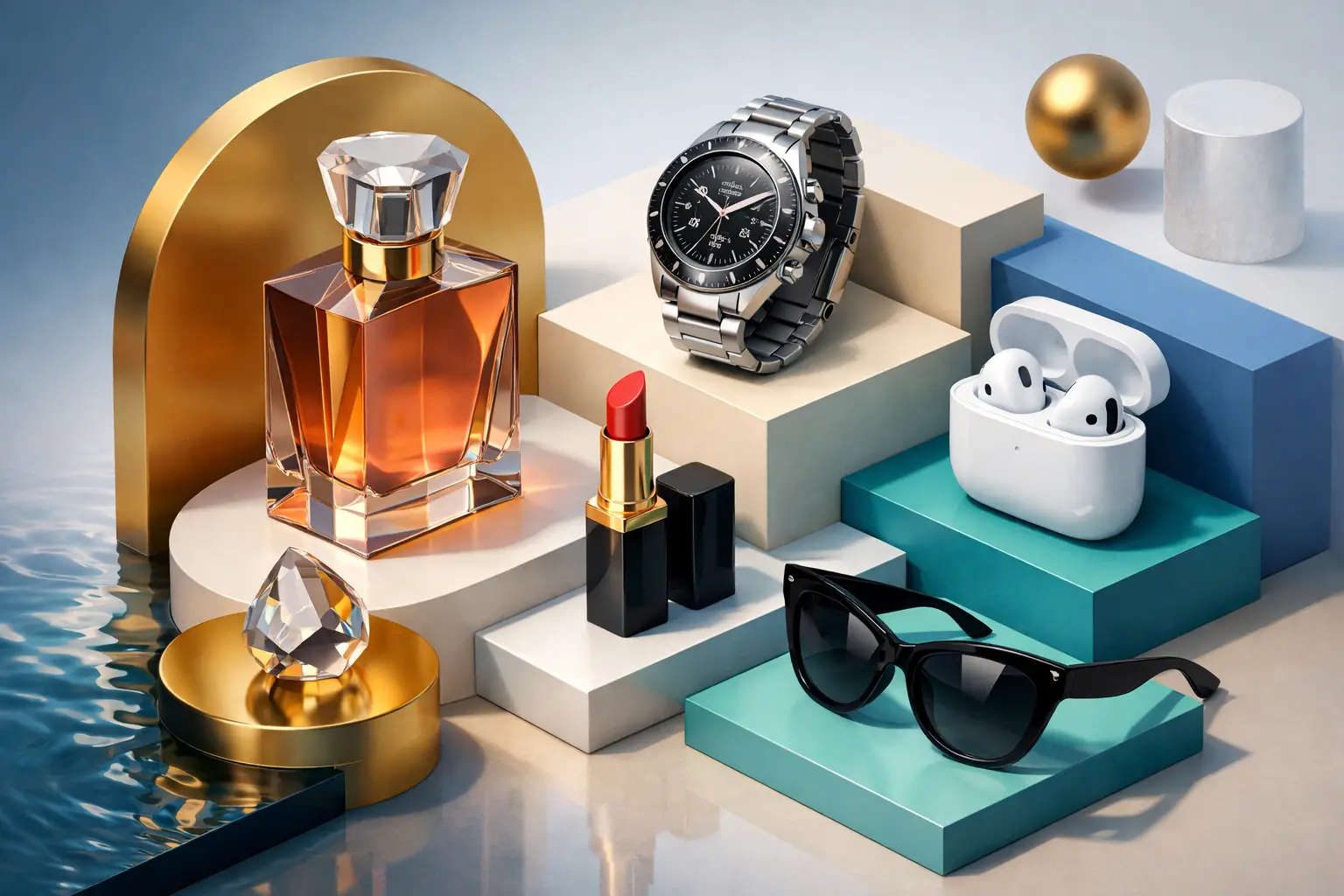
A luxury product is judged before it is understood. The weight of a fragrance bottle, the grain of a leather seam, the cold precision of machined metal – each cue shapes perception in seconds. Luxury product CGI visuals give brands command of those cues, creating imagery that makes a product feel considered, desirable and unmistakably premium before it reaches a shelf, screen or showroom.
For marketing teams and creative directors, that control changes more than the final frame. It changes what can be imagined, refined and delivered across an entire campaign.
Why Luxury Product CGI Visuals Command Attention
Luxury is communicated through restraint and exactitude. A product visual must make materiality believable without becoming clinical, and feel aspirational without drifting into generic gloss. That balance is difficult to achieve in any medium. In CGI, it relies on artistic judgement as much as technical capability.
A convincing visual begins with observation. How does brushed aluminium soften a highlight? Where does a polished cap pick up colour from its surroundings? Does a silk ribbon fall with enough irregularity to feel real? These decisions determine whether a product appears expensive or merely rendered.
Photography remains the right choice when the campaign depends on a particular human moment, location or tangible one-off object. But it brings practical constraints: prototypes may be unfinished, reflective surfaces are demanding to photograph, and retouching a late-stage design change can be costly. CGI offers a different kind of freedom. It allows the product, environment, lighting and camera to be built with precision, then adjusted without restarting a physical shoot.
That freedom is valuable only when it is directed by distinguished artists. Luxury audiences are particularly sensitive to shortcuts. Plastic-looking glass, overly perfect liquids and lighting that flattens a form can undermine the very positioning the campaign is intended to protect.
Material Fidelity Is the Real Standard
The most persuasive luxury product CGI visuals do not announce their technique. They create a sensory response. Viewers should sense the density of a glass vessel, the softness of a textile or the crisp construction of premium packaging, even on a small mobile screen.
This depends on a layered approach to material creation. Surface imperfections must be calibrated rather than eliminated. Fine scratches, slight variation in lacquer, tiny bevels and the way light breaks along an edge all contribute to credibility. In luxury work, perfection is rarely literal perfection. It is controlled imperfection, introduced with enough subtlety to suggest real craftsmanship.
Lighting carries equal responsibility. A simple black background may heighten silhouette and drama for a jewellery or technology launch, while a luminous tonal set can make skincare or fragrance feel tactile and elevated. Neither approach is inherently more luxurious. The right visual language depends on the product category, audience and the campaign’s central idea.
A watch campaign may require forensic attention to reflections and finishing, because the audience expects to inspect every detail. A premium food or beverage image may benefit from more expressive light, movement and atmosphere. The common requirement is intentionality: every highlight, shadow and composition choice should serve the product’s value.
Art Direction Cannot Be Added at the End
CGI is sometimes treated as a post-production solution – a way to make an approved design look polished once the important decisions have been made. That approach often produces competent assets but rarely exceptional ones.
The strongest results emerge when art direction informs the production from the outset. Reference imagery should identify more than a preferred colour palette. It should establish the level of realism, the desired emotional temperature, the role of motion, the relationship between product and environment, and the details that cannot be compromised.
This is particularly useful when multiple stakeholders are involved. A clear visual brief protects the creative ambition while giving brand, design and production teams a shared standard against which to assess work. It also makes feedback more productive. Rather than asking for a scene to feel “more premium”, teams can discuss the density of the atmosphere, the sharpness of the lighting or the prominence of a material finish.
One Product, Many Campaign Worlds
A physical shoot generally captures a product within a limited set of conditions. CGI can place the same asset in a succession of tailored worlds without losing consistency. A hero film, still-life campaign, social cut-down, point-of-sale asset and digital product page can all work from the same meticulously built product model.
This is not simply an efficiency argument, although it can reduce duplication across markets and formats. It is a creative advantage. A campaign can retain a recognisable visual signature while adapting its pace, crop and composition to the context in which it appears.
For example, a launch visual for a premium technology product might use sculptural macro shots to establish engineering detail, then shift to abstract animation for digital display and simplified, product-led imagery for retail. Each output has a distinct job, yet the material language and lighting remain coherent.
The trade-off is that CGI needs planning. High-quality models, sophisticated simulations and complex animation require sufficient time for development, review and refinement. A rushed process can still deliver an asset, but luxury positioning leaves little room for approximations. Early alignment on deliverables, usage and technical requirements is the more reliable route to a flexible asset library.
Motion Should Reveal, Not Decorate
Animation can make luxury products feel alive, but movement must earn its place. A slow rotation may reveal the sculptural quality of a bottle. A controlled burst of particles can articulate a product benefit. A folding fabric or flowing liquid can add a sense of touch and theatre.
When motion is added solely because the format permits it, the result can feel busy or over-produced. Premium work often has the confidence to hold a frame. The animation should direct attention towards a product detail, create anticipation or deepen the campaign narrative. It should never compete with the object it is designed to elevate.
This is where specialist talent matters. Product visualisation, fluid simulation, characterful animation and food CGI demand different disciplines. The most effective production partner understands when to bring in a particular artist or studio, and how to maintain a unified creative standard across those specialisms.
A Managed Process Protects the Creative Outcome
Commissioning luxury CGI is not only about selecting impressive showreels. It is about ensuring that artistic ambition survives the path from brief to delivery. That requires transparent communication, clear stages of approval and a team able to translate brand language into practical production decisions.
An effective process usually begins by defining the non-negotiables: product accuracy, campaign objectives, intended formats, timeline and decision-makers. From there, visual development can establish the composition, materials and lighting before detailed rendering begins. This prevents expensive revisions later, especially where the product is still evolving or the work will be adapted internationally.
The final stage should consider delivery as carefully as creation. A master asset may need alternative crops, resolution variants, animation cut-downs or versioning for different markets. Planning these requirements early helps preserve quality rather than forcing compromises after the hero work has been approved.
Best of Breed brings this discipline together with access to a curated global roster of award-winning digital artists, matching the right creative expertise to each product and campaign ambition.
The Value Is in What the Audience Feels
Luxury product imagery does not need to explain its production method. Its purpose is to make the audience pause, look closer and attach a higher value to the object in view.
That outcome comes from more than photorealism. It comes from a precise understanding of materials, a clear art direction, and the confidence to make every detail purposeful. When CGI is treated as a bespoke creative discipline rather than a technical shortcut, it gives a brand something more enduring than a beautiful launch image: a visual world worthy of the product it represents.