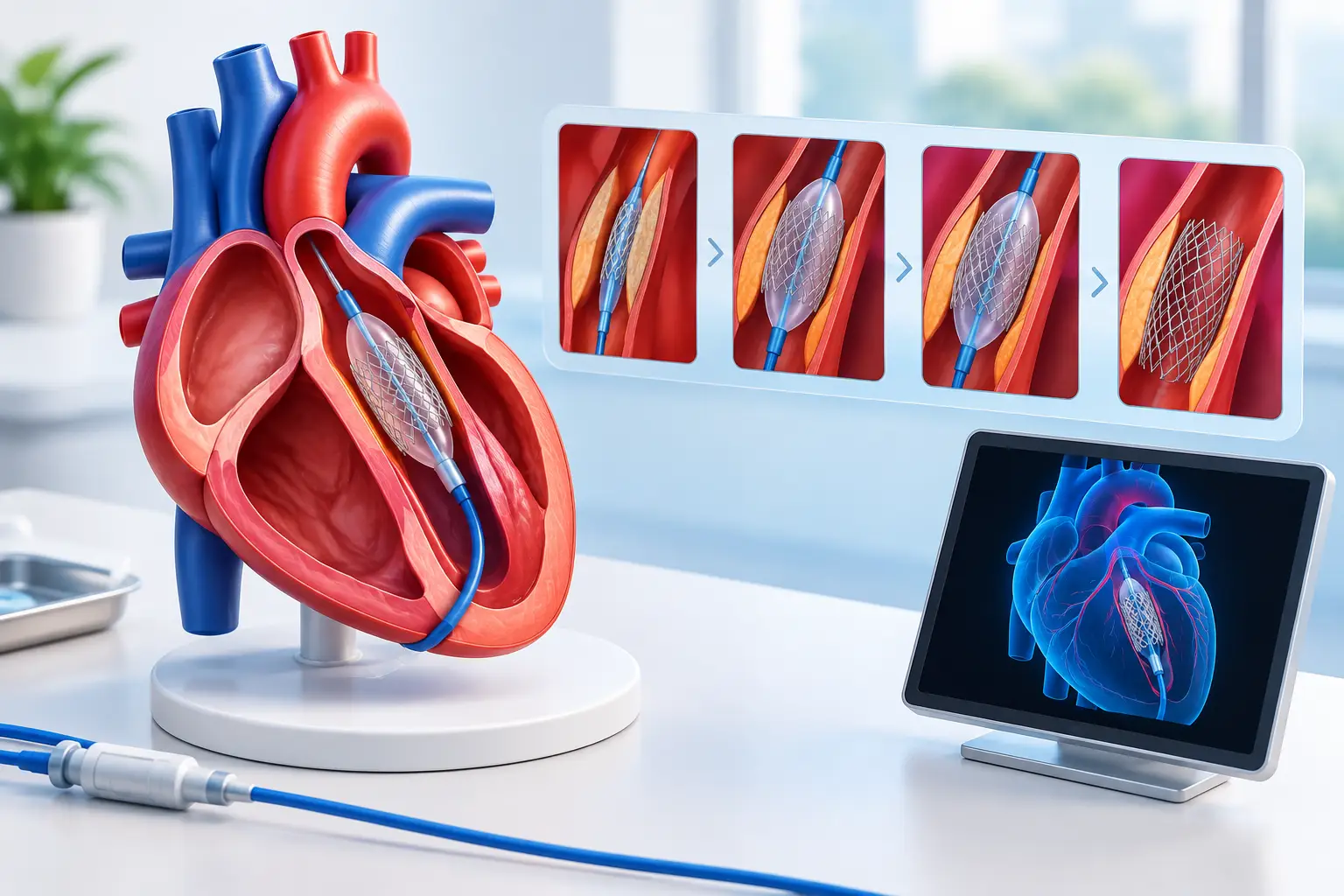
A medical device animation example is rarely judged on visual polish alone. It must make a device feel credible before it is handled, explain a mechanism before a representative begins speaking, and retain enough visual distinction to earn attention in a crowded clinical or commercial setting. That combination demands more than a rotating product render. It demands disciplined storytelling, exacting CGI and a clear understanding of the audience’s level of knowledge.
For marketing teams, product leaders and creative directors, the strongest work turns complexity into conviction. It gives a sales conversation a focal point, gives a launch campaign a visual centre, and gives clinicians a faster route into understanding what makes a product different.
What a strong medical device animation example should achieve
The most effective animation begins with a precise job to do. A vascular device, diagnostic platform and wearable monitoring product may all require CGI, but they should not be approached with the same narrative structure. The clinical question, communication channel and viewer’s prior knowledge determine what the film needs to reveal.
At its best, a medical device animation balances three objectives: product accuracy, comprehension and brand presence. Remove accuracy and the work risks becoming decorative. Remove comprehension and even an immaculate render becomes difficult to use. Remove brand presence and the film may explain the device perfectly while failing to create a memorable commercial asset.
A well-considered sequence can show the external form first, then move through an impossible camera path into the product’s internal architecture. It can isolate a component, reveal material behaviour, visualise the anatomy or environment around it, and return to the device in a composed product shot. The viewer should understand not only what they are seeing, but why each reveal matters.
The mechanism is the story
A common weakness in technical product animation is treating the mechanism as an inventory of features. The result is a string of exploded views, callouts and component labels with no sense of hierarchy. A stronger approach identifies the pivotal action: deployment, sensing, fluid transfer, image capture, dose delivery, locking, filtering or feedback.
That action becomes the narrative spine. Supporting details are then introduced only where they help explain performance or differentiate the product. For a catheter, the key moment may be controlled navigation and placement. For a diagnostic system, it may be the journey from sample to actionable result. For an implant, it may be the relationship between engineered geometry and the surrounding anatomy.
This is not an argument for oversimplification. Sophisticated audiences recognise when detail has been flattened beyond usefulness. The craft lies in deciding which technical information belongs on screen, which should be held for voiceover or supporting materials, and which can remain implicit.
Medical device animation example: the anatomy of a convincing film
Consider a hypothetical launch film for a minimally invasive closure device. The opening may establish the object against a quiet, highly controlled backdrop, allowing its silhouette, materials and build quality to register. Rather than lingering on beauty shots, the camera then follows the device into a simplified anatomical context.
The anatomy should be sufficiently specific to orient the viewer without becoming visually noisy. Semi-transparent tissue, restrained colour coding and carefully selected cutaways can make an internal procedure legible. Once the device reaches its intended position, the animation slows at the exact point of interaction. The viewer sees how the mechanism expands, anchors or seals, and how the final configuration supports the stated clinical purpose.
The final return to the product is commercially valuable. It reconnects the clinical explanation with the object being marketed, leaving the audience with a clear image for presentations, event screens, paid media and sales enablement. In a single asset, the device has become both understandable and distinctive.
The same logic applies to devices that are not used inside the body. A benchtop instrument may need to communicate workflow, compactness and precision. A wearable may need to show comfort, data flow and everyday context without making claims that exceed approved messaging. In each case, the animation must decide where realism adds confidence and where abstraction improves clarity.
Precision is a production discipline, not a finishing touch
Medical device CGI has little tolerance for casual approximation. Proportions, materials, interfaces, moving parts and use conditions all influence whether the work feels credible to a specialist viewer. That does not mean every internal surface requires engineering-level detail at every moment. It means the production must know what cannot be wrong.
The process should begin with authoritative source material: CAD files where available, technical drawings, product photography, clinical reference, approved messaging and direct access to subject matter experts. CAD data can provide a valuable starting point, but it is not automatically animation-ready. It may require rebuilding, optimisation and surface development before it can achieve the required level of visual refinement.
Material treatment also carries meaning. A polished metal surface, moulded polymer, silicone element or optical sensor should behave convincingly under light. Poorly judged reflections or generic textures can make a premium device appear like a prototype. Equally, excessive gloss can obscure form and distract from functional detail. The right finish depends on the product, its category and the final viewing environment.
Clinical review should be built into the schedule rather than positioned as a last-minute approval gate. Early reviews can validate the story and key frames before substantial animation work begins. Later reviews should focus on motion, labels, anatomical context and claim alignment. This protects the integrity of the asset while reducing expensive revisions at the point of final delivery.
Clarity without diluting the science
Different audiences require different levels of explanation. A film for a specialist congress can assume familiarity with anatomy and procedure. A broader brand campaign may need to convey the value of an innovation without presenting a procedural tutorial. The same core CGI can often support both, but only if the content has been planned as a system rather than a one-off film.
This is where modular production has genuine value. A hero animation can be developed alongside shorter mechanism loops, isolated product turns, still imagery and vertical edits. The assets share lighting, materials and art direction, creating a coherent visual language across channels. They can then be adapted for exhibition displays, launch presentations, websites, social formats and sales meetings without repeatedly rebuilding the product from scratch.
There is a trade-off. A film designed to serve every possible audience can lose focus. It is often better to create one decisive hero narrative and derive carefully chosen cutdowns from it. The central film should have a clear audience and a clear outcome, whether that is explaining a procedure, supporting a product launch or strengthening a premium brand position.
Art direction can create distinction within strict boundaries
Medical communication is frequently associated with cold blue palettes, floating interface graphics and generic anatomical imagery. Those conventions can be useful, but they are not a creative strategy. A distinctive art direction can elevate a device without compromising seriousness or precision.
The opportunity may lie in lighting, composition, pacing, camera language or the relationship between product and environment. A refined visual world can make a complex object feel considered, valuable and trustworthy. For brands competing in technically similar categories, that perceived quality matters. It shapes how the audience interprets the innovation before every specification has been read.
The most successful work does not impose style on the science. It uses style to direct attention towards the science. Deliberate negative space may clarify a fine mechanism. A measured camera move may make a small engineering innovation feel substantial. A restrained palette may separate active components from supporting anatomy without turning the film into a diagram.
At Best of Breed, this is where distinguished CGI artists and specialist production management are most valuable: marrying technical fidelity with a visual standard worthy of a flagship commercial campaign. The aim is not simply to show a device. It is to give it a compelling, ownable presence.
Questions to settle before commissioning the animation
Before production begins, establish the intended audience, the single most important message and the channels where the asset will appear. Confirm which claims are approved, which product details must be exact, and who has authority to sign off clinical accuracy. These decisions shape script length, visual complexity, camera choices and delivery specifications.
It is also worth deciding whether the product should be shown in a realistic procedural setting, a stylised anatomical environment or an abstract technical space. Realism can create immediate context, but it introduces more variables for review. Abstraction can concentrate attention on a mechanism, though it may require clearer framing to avoid ambiguity. Neither route is inherently superior; the right choice follows the communication objective.
Give the production team a defined hierarchy of source materials and a transparent review route. Precision moves faster when creative, product and regulatory stakeholders are aligned from the first storyboard. It also leaves more room for the decisions that audiences actually notice: the elegance of the reveal, the confidence of the motion and the clarity of the final frame.
A medical device film earns its value when the viewer can see the innovation, understand its purpose and remember the product afterwards. Commission it with that standard in mind, and CGI becomes far more than illustration of a mechanism. It becomes a considered expression of the engineering, expertise and ambition behind it.