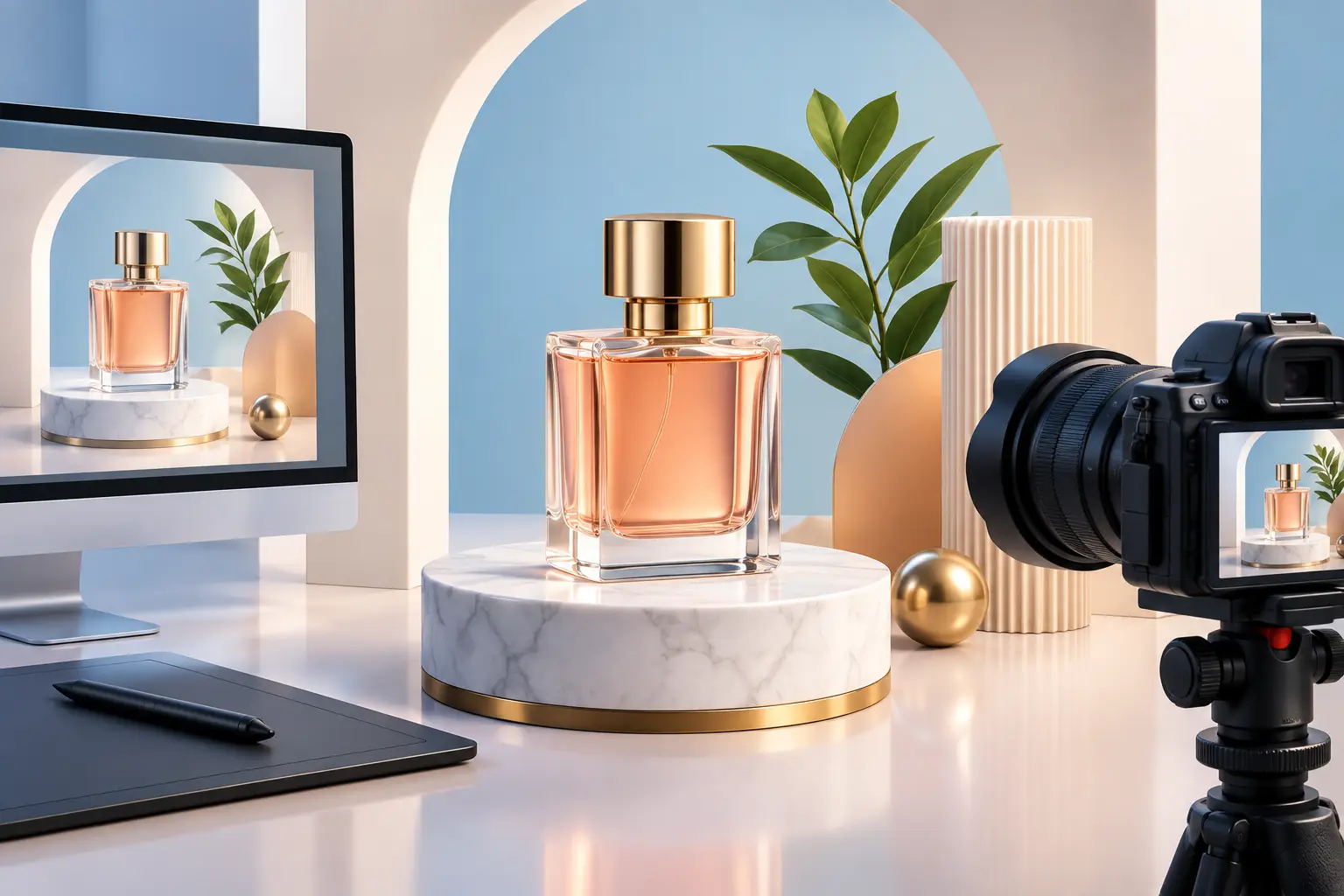
A packshot is often the final proof of a product’s value. It is the image that must carry packaging, texture, finish and brand character in a single, immediate glance. So, why use CGI packshots rather than rely solely on traditional photography? Because when every reflection, label edge and material decision matters, CGI offers a level of control that a physical shoot cannot always guarantee.
For brand teams working across campaigns, commerce, packaging and launch materials, that control is not a technical luxury. It is a practical creative advantage. A considered CGI packshot can present a product at its absolute best, then adapt with precision as the campaign evolves.
Why use CGI packshots in a premium visual system?
A conventional product shoot depends on physical samples, studio conditions, props, styling and the limits of what can be achieved in camera. That approach remains valuable, particularly when a product’s real-world tactility or human interaction is central to the idea. Yet it can become restrictive when products are unfinished, surfaces are highly reflective, or the brief requires multiple executions at pace.
CGI packshots begin with a digital asset built to exact specifications. The geometry, materials, print finishes, lighting and composition can all be art-directed before a final image is rendered. The result is not an approximation of the product. At the highest level, it is a meticulously crafted visual representation designed around the campaign’s needs.
This matters most in categories where visual scrutiny is high. Food packaging must feel appetising without appearing artificial. Beauty and premium spirits need glass, liquid and metallic detail that rewards close inspection. Technology demands immaculate edges, screen treatments and material transitions. Pharmaceutical imagery must communicate clarity and confidence while remaining true to approved product details.
The benefit is consistency. A hero visual for a launch film, a retail crop, an out-of-home execution and a social asset can all originate from the same carefully managed product build. Every asset retains the same colour, label position, lighting logic and level of finish, even when the format changes completely.
Control over the details consumers notice
Consumers may not articulate why a packshot feels premium, but they recognise when something is unresolved. A distorted reflection on a bottle, an unconvincing foil stamp or a label that sits fractionally wrong can diminish the entire image. CGI gives creative teams the ability to scrutinise those details before they become expensive compromises.
With a bespoke digital build, the team can refine the material qualities that define the product: the condensation on a chilled can, the translucency of a serum bottle, the grain of a carton, the soft bloom of a matte-coated pack or the crisp specular highlight across polished aluminium. These are not generic effects applied at the end of production. They are considered components of the image.
Lighting is equally important. Product photography often involves balancing the realities of a studio setup against a desired visual language. In CGI, light can be shaped with exceptional precision. A pack can sit in clean, elevated daylight for an e-commerce campaign, then move into a more cinematic environment for a brand launch without losing its physical credibility.
That does not mean CGI should make every product look hyper-real or aggressively glossy. The strongest work is guided by judgement. Some products need restrained lighting and near-clinical clarity. Others benefit from richer contrast, atmosphere and carefully controlled imperfection. The right treatment depends on the brand, the category and the role the image needs to perform.
Create before the product is available
The commercial timetable rarely waits for final production samples. Packaging may still be going through approvals while media plans, retailer presentations and launch activity are already underway. Photography cannot begin until a sufficiently finished product exists. CGI can begin much earlier, provided the product information is reliable.
This gives marketing and creative teams more room to make meaningful decisions. Rather than rushing to photograph a last-minute sample, they can test the pack against a background, explore a composition, review alternative finishes or build a suite of launch assets before the production line is fully operational.
Early visualisation is particularly valuable when the product itself is difficult to photograph. It may be oversized, miniature, fragile, temperature-sensitive or expensive to transport. It may not exist physically at all, as is often the case with future-facing technology, concept products or new packaging systems. In such cases, CGI is not simply more efficient. It is the only credible route to a polished campaign image at the required stage.
Of course, earlier production demands disciplined inputs. CAD data, packaging artwork, technical drawings, reference photography and clear approval ownership all make a difference. A premium result relies on a strong source of truth, not guesswork. The better the information at the outset, the more confidently the product can be represented.
Build once, produce across every channel
One of the most compelling reasons to use CGI packshots is their long-term usefulness. A well-made product asset is not limited to one shoot day or one agreed camera angle. It becomes a flexible production foundation.
A single build can support a front-facing packshot, an angled hero frame, a close material study, a line-up of variants or a cutaway composition. It can be rendered for a high-resolution print placement, a retailer listing, a vertical social format or a motion sequence. If the brand expands into a new market, the same pack can be updated with localised artwork while retaining the established visual standard.
This does not mean every output should be generated indiscriminately. Variety still requires creative direction. A widescreen campaign image, for example, may need a different compositional idea from a tight mobile placement. But the digital asset removes the need to recreate the product from scratch for each requirement. It lets teams spend their budget and attention on the visual decisions that actually change the work.
For businesses with frequent product refreshes, variant launches or seasonal campaigns, that efficiency can be substantial. Changes to flavour names, legal copy, pack colours or label artwork can be managed within the production process instead of triggering an entirely new photoshoot. The value lies in both speed and continuity.
Make difficult shots achievable
Some packshots are straightforward. Others ask a physical studio to solve several conflicting problems at once: capture transparent glass without unwanted reflections, show a black glossy object without losing form, freeze splashing liquid, preserve ice detail and keep every brand element legible. CGI is particularly powerful when the creative ambition exceeds what is repeatable in camera.
It allows a product to occupy environments that would be impractical, costly or impossible to construct physically. A product can sit within a precise world of ingredients, motion, atmosphere or abstract brand forms, while its proportions and finish remain protected. Multiple products can be arranged in a perfectly balanced composition without the instability of real liquid, melting surfaces or fragile packaging.
The distinction is not between CGI and reality. It is between a visual that is merely possible and one that is completely controlled. The most successful CGI packshots preserve the cues that make an object believable while taking the art direction beyond the constraints of a studio table.
The trade-offs worth considering
CGI is not automatically the right choice for every packshot. If a product has an available physical sample, a simple brief and a requirement for a small number of standard views, photography may be the more direct route. A photograph can also bring a particular spontaneity when real ingredients, hands or lived-in environments are fundamental to the brand story.
CGI also requires specialist skill. A technically accurate model is not enough. Materials must behave convincingly, label details must be exact, light must feel intentional and the final composition must have the visual authority of a campaign image. Commodity 3D can look sterile or implausible when it lacks artistic judgement.
That is why the production partner matters. Distinguished CGI artists combine traditional image-making instincts with advanced digital craft. They understand not only how to model a pack, but how to make its surfaces, scale and silhouette communicate quality. Transparent communication through approvals is just as essential, particularly where packaging claims, regulated information or pre-launch confidentiality are involved.
From product asset to campaign advantage
The best CGI packshots do more than document what is on shelf. They establish how the product should be seen. They give creative directors a dependable visual centre for a campaign, producers a more adaptable production route and brand teams a library of assets that can evolve without losing fidelity.
Best of Breed brings together specialist CGI talent selected for the demands of each brief, from immaculate packaging illustration to product-led animation. The aim is not a standardised house style, but the right level of artistry, technical mastery and production discipline for the brand in front of the camera.
When the product is a major expression of brand value, treat the packshot as more than a deliverable. Build it as an asset with the precision, flexibility and visual conviction to keep working long after launch day.