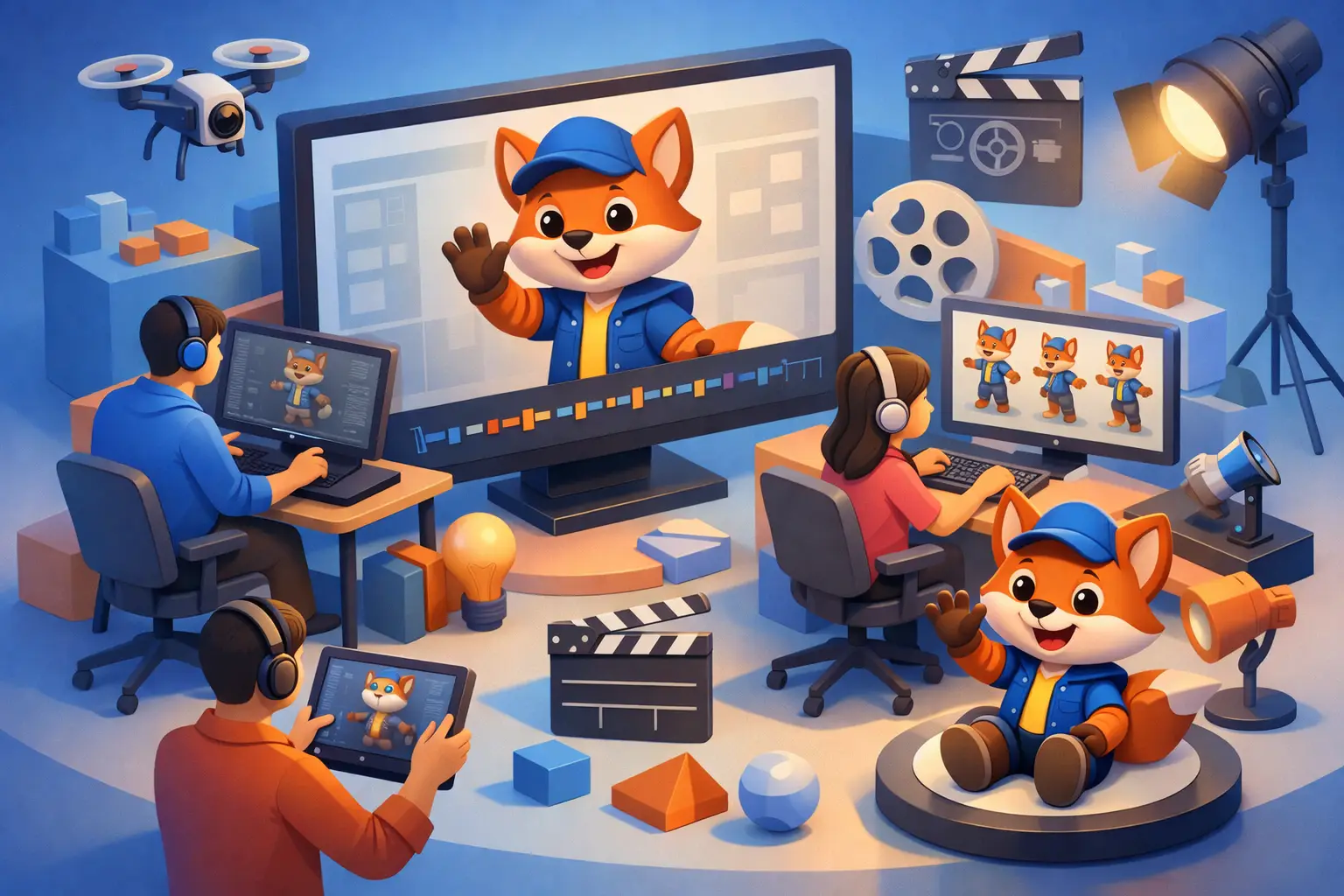
A character can carry more than a campaign message. It can hold a product benefit, a distinct tone of voice and years of brand memory in a form audiences recognise in seconds. That is why branded character animation services deserve the same strategic attention as a visual identity system or hero campaign platform. When the work is right, a character does not merely decorate communications. It becomes an ownable asset that makes a brand harder to overlook and easier to remember.
For brand teams, the opportunity is significant, but so is the creative standard required. Audiences are quick to spot generic mascots, borrowed internet humour and animation that has been produced without weight, personality or purpose. A successful branded character needs a clear role in the brand world, exceptional craft in every movement, and the flexibility to perform across formats without losing its identity.
Why branded character animation services matter
Characters make abstract brand qualities visible. A food brand may need to express indulgence and playfulness; a technology business may want to make complex functionality feel approachable; a pharmaceutical campaign may require empathy without losing scientific credibility. A considered character gives those qualities a physical presence.
Animation is what turns that presence into belief. The smallest decisions matter: the timing of a glance, the resistance in a soft body as it lands, the pause before a reaction, the material response under light. These details establish whether a character feels premium, humorous, intelligent, mischievous or reassuring. They also determine whether the audience sees a living personality or simply a graphic moving through a frame.
For commercial work, character animation has another advantage: it creates a reusable system. A well-designed character can lead a 30-second film, punctuate social content, appear in product explainers, inhabit retail displays and support seasonal campaign variations. This is not an argument for using the same asset everywhere. Repetition without fresh creative direction can quickly flatten an idea. It is an argument for building a distinctive asset with enough depth to evolve.
Start with a role, not a mascot
The most effective character work begins before model-making or motion tests. The core question is not, “What should the character look like?” It is, “What job should it do for the brand?”
Some characters are product demonstrators. Their value lies in making features, ingredients or usage moments immediately legible. Others are narrative hosts, guiding an audience through a world with charm and clarity. Some operate as brand symbols, appearing briefly but consistently to create recognition. The role changes the design, the performance and the production approach.
A character designed to explain a financial product, for example, may need controlled movement, readable gestures and an expression range that supports trust. A character for a confectionery launch can be more exaggerated, tactile and playful, with motion that emphasises flavour, energy or surprise. Both can be visually arresting, but they should not be built to the same brief.
This strategic definition also prevents a common failure: asking a character to be everything at once. When it must explain, entertain, deliver a sales message, appeal to every demographic and fit every channel, personality is usually the first casualty. A sharper role creates stronger creative choices.
Define the character’s behavioural territory
A character bible should go beyond appearance. It should establish how the character moves, reacts, communicates and relates to the product. Does it float with effortless confidence or move with deliberate, crafted precision? Is its humour dry, physical or absent altogether? Does it speak, gesture, use facial expression, or remain silent?
These rules are especially valuable when a campaign will run across multiple markets, agencies or production partners. They create continuity without forcing every execution into the same scene. The aim is recognisable behaviour, not rigid repetition.
Craft is where personality becomes credible
High-end CGI character work combines traditional artistic fundamentals with technical control. Silhouette, proportion, pose, colour, texture, lighting and composition establish the visual language. Rigging, simulation, rendering and compositing allow that language to perform under real production demands.
The distinction is visible in the final seconds of a film. A premium character has a convincing relationship to its environment. It presses into surfaces, responds to gravity, catches light in ways that suit its material, and occupies the frame with intention. Even highly stylised work needs internal logic. A jelly-like figure, a hand-drawn-inspired creature or an impossible product mascot can break the laws of reality, but it must obey the rules of its own world.
Motion design should support the same principle. Fast-cut, energetic animation may be right for sport, youth culture or a launch moment. It may undermine a luxury, health or technology message that needs calm authority. The strongest animation direction is not defined by how much movement it contains. It is defined by what every movement communicates.
At Best of Breed, this is where a curated network of distinguished CGI artists matters. Character projects often require different specialist strengths across concept design, modelling, surfacing, creature work, performance, lighting and post-production. Bringing the right expertise together under one managed production process protects both the original idea and the finished detail.
Build for campaign life, not a single deliverable
A hero film can establish a character, but it should not be the only context considered. Before production begins, brand teams should identify the likely asset ecosystem: campaign films, social cut-downs, vertical formats, still imagery, digital display, retail content, event screens, product interfaces or packaging extensions.
This does not mean producing every asset from day one. It means making intelligent early decisions about models, rigs, textures, environments and framing. A character designed only for one tightly cropped shot may become expensive or impractical to adapt later. Conversely, building a fully universal production system for a short-term campaign can add unnecessary cost and complexity.
The right scope depends on intended lifespan. For a one-off launch, investment may belong in an exceptional hero moment with a limited suite of adaptations. For a long-term brand platform, it may be worth developing modular expressions, reusable motions, alternate outfits or environments, and a clear governance framework for future use.
Consider stills alongside motion
Character animation is rarely experienced only as animation. Key visuals, posters, thumbnails and social frames often deliver the first encounter. The character therefore needs to read in a single image as well as in a moving sequence.
Pose libraries and considered key art should be planned as part of the production, rather than treated as an afterthought. A compelling silhouette, a clear focal point and an image that leaves space for campaign messaging can dramatically improve the usefulness of the asset across paid and owned channels.
A production process that protects the idea
Ambitious character work benefits from a disciplined production structure. The early phase should align the creative ambition with practical requirements: audience, channels, usage territory, technical specifications, launch date, approval process and the degree of asset reusability required. These details are not administrative friction. They shape the work.
Concept development then establishes the character’s visual territory and performance cues before the project commits to full build. Reference frames, style explorations, storyboards and animatics give stakeholders an opportunity to assess the central idea at the right stage. It is considerably more efficient to refine personality, pacing or art direction before final animation and rendering are underway.
Transparent communication is essential throughout. Character animation brings together subjective creative decisions and highly specific production dependencies. Clear feedback rounds, consolidated approvals and a shared understanding of what is being reviewed reduce drift while allowing the work to retain its creative edge.
The final stage should include delivery planning, not simply final renders. Different channels may require distinct aspect ratios, frame rates, compression standards, transparent-background elements or cut-down timings. A managed CGI production partner can anticipate these needs without compromising the quality of the master asset.
What separates memorable work from novelty
Novelty can attract an initial view. Character equity is earned over time. The difference usually comes down to relevance, consistency and restraint.
A memorable character reflects something true about the brand rather than borrowing a popular visual trend. It has enough personality to invite repeat viewing, but does not overwhelm the product or message it is meant to serve. Its world feels coherent, from the material finish and lighting to the rhythm of its motion and language of its campaign copy.
There is also a commercial test. If the character were shown without a logo, would the intended audience still connect it to the brand after repeated exposure? If the answer is no, the design may be visually entertaining but insufficiently ownable. Distinctive colour, form, behaviour and product integration can all help build that association.
The most valuable characters leave room for future creative teams to add new stories without erasing what made them recognisable in the first place. Commission work that gives your brand a performer, not just a prop, and every new campaign has a stronger place to begin.