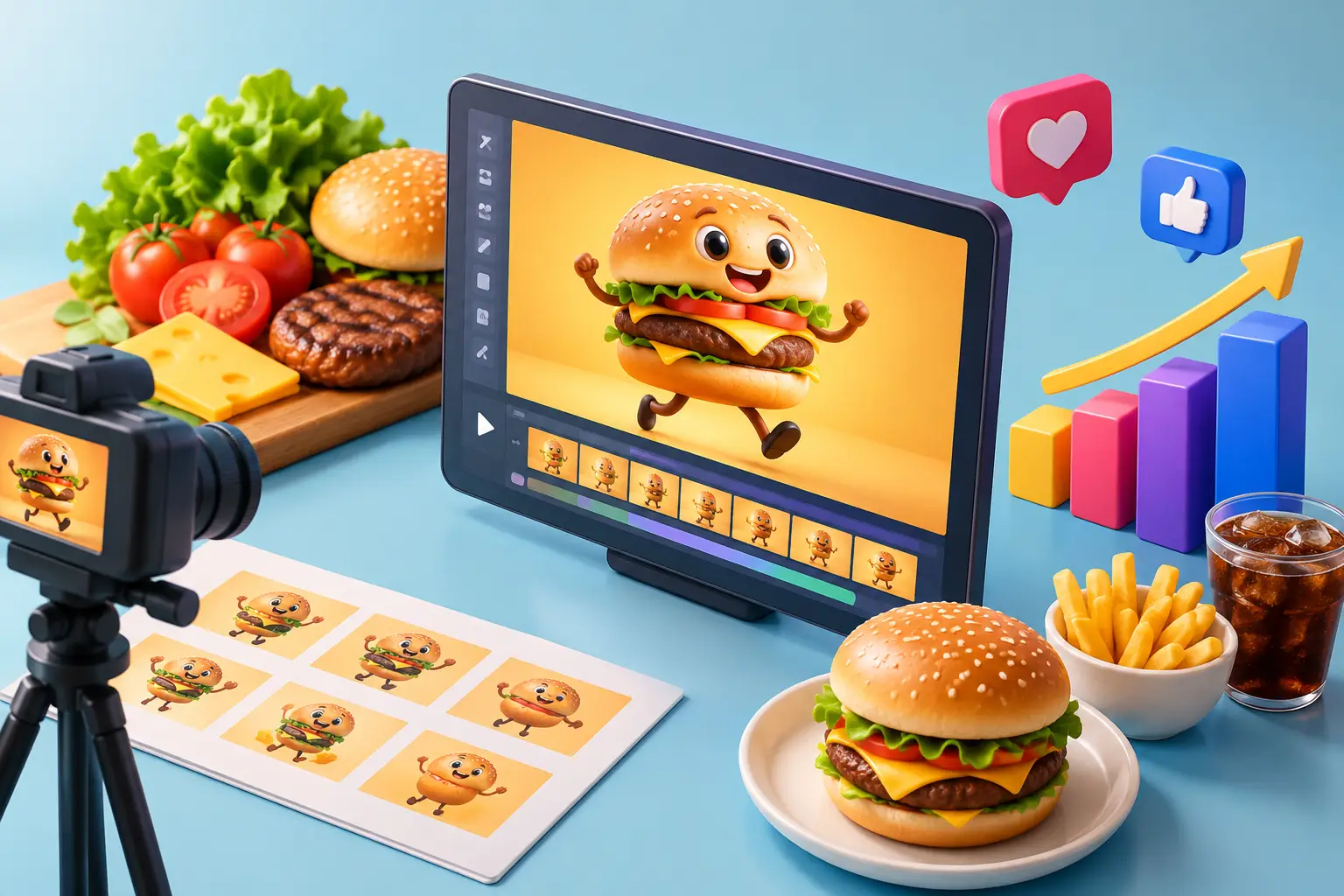
A slow-breaking chocolate shell. Condensation travelling across a chilled bottle. A perfectly weighted pour that catches light at precisely the right moment. The strongest food animation outcomes are not simply attractive moving images. They make a product feel more desirable, more distinctive and more immediately understood before a viewer has read a single word of copy.
For food and drink brands, that difference matters. Product imagery must often carry flavour, freshness, texture, provenance and premium positioning in seconds. CGI animation offers exceptional control over each of those signals, provided the creative idea, specialist craft and production strategy are aligned from the outset.
Food Animation Outcomes That Matter Commercially
The most valuable outcome is appetite appeal. This may sound self-evident, but appetite is a technical and creative achievement rather than a happy accident. The gloss on a sauce, the fracture of a crisp, the elasticity of melted cheese and the density of a liquid all require close observation and material mastery. If any of those cues feel generic, exaggerated or physically implausible, the work can undermine confidence in the product instead of elevating it.
High-end food CGI makes it possible to refine these sensory details with unusual precision. Artists can control lighting, camera movement, surface response and timing down to the frame. A splash can be energetic without obscuring the pack. Steam can suggest warmth without becoming theatrical. A macro close-up can make a familiar ingredient appear newly compelling.
That level of control is particularly valuable when the real product is difficult to photograph. Ice cream melts. Carbonation disappears. Fresh ingredients vary from one shoot to the next. Delicate garnishes do not always survive repeated takes. CGI gives a brand the ability to present its product at its visual peak, consistently, while retaining the natural irregularities that stop food from appearing synthetic.
A second commercial outcome is product clarity. Motion can reveal details that a still image cannot: a biscuit’s layers, a filling’s texture, a beverage’s flavour cues or the way a meal is assembled. The viewer does not need to be told that a product is crisp, smooth, indulgent or refreshing if the animation communicates it through material, movement and sound-led visual rhythm.
This is not an argument for making every shot busy. Premium food animation often succeeds through restraint. A restrained camera move and one exceptional material moment may do more for a luxury confectionery brand than a succession of liquid simulations and flying ingredients. The right level of spectacle depends on the category, audience and campaign role.
Building Appetite Without Losing Brand Character
Food advertising has long relied on visual shorthand, but categories can quickly become crowded with the same visual language. Swirling coffee, falling berries and explosive splashes may be technically impressive, yet they are not automatically ownable. The most enduring work develops a visual system that belongs to the brand.
That system may begin with colour. A distinctive palette can turn a product moment into recognisable campaign territory. It may be rooted in a considered approach to composition, where a familiar pack occupies an unexpected space. It may come from characterful ingredient styling, graphic transitions, surreal scale or a particular relationship between food and typography.
CGI is especially suited to these more bespoke directions because it does not require a physical set to obey conventional constraints. A piece of fruit can become monumental. A pack can move through an abstract landscape built from brand ingredients. A product cross-section can transform into a world of its own. Such ideas need discipline, however. The product must remain legible and the brand must remain present. Imagination without hierarchy can leave audiences admiring the execution while forgetting what was being sold.
For a premium campaign, the key question is not, “What can CGI do?” It is, “What should this brand be known for visually?” The answer should guide every decision, from the density of a liquid to the pacing of the edit.
Texture is where credibility is won
Food is judged through texture even on a screen. Viewers instinctively understand the difference between a powdery crumb, a glazed pastry, a velvety sauce and a dry, brittle cracker. That is why food CGI demands more than generalist 3D capability. It requires artists who understand real-world references, photographic lighting and the small imperfections that make a render feel appetising.
The trade-off is time and attention. Hero food assets benefit from dedicated look development before animation begins. This stage establishes the surfaces, translucency, micro-detail and lighting behaviour that will carry the work. Rushing it may reduce upfront cost, but it often creates revisions later, when a product looks too plastic, too polished or simply unlike itself.
Outcomes Across Campaign, Packaging and Social Formats
A well-planned animation can deliver far beyond a single hero film. Once the product, ingredients and visual environment have been built to a high standard, they can be adapted into campaign cut-downs, paid social content, retail displays, product-page films and key visuals. This is one of CGI’s strongest practical advantages: the underlying asset base can support a connected suite of communications.
That does not mean every deliverable should be a crop of the same sequence. Different placements require different priorities. A six-second social execution needs immediate recognition and a clear focal point. A large-format retail screen can sustain slower, more atmospheric movement. A product-page animation may be more functional, revealing format, flavour or preparation details.
Planning these requirements early affects the creative result. Camera framing, asset resolution, aspect ratios and pack visibility should be established in pre-production, not treated as technical afterthoughts. A film designed only for widescreen may not retain its impact in vertical formats. Equally, a macro sequence that excels on a mobile screen may not have enough visual breadth for a flagship out-of-home placement.
The best food animation outcomes therefore combine a memorable hero idea with an intelligent content architecture. The creative work remains coherent while each format performs its specific job.
Measuring the Right Result
Not every success can be isolated to a single metric. Food animation can support awareness, consideration, product education or conversion, and the appropriate measure changes with the brief. For a brand launch, distinctiveness and completed views may be meaningful indicators. For an e-commerce asset, attention to product detail and add-to-basket performance may matter more. In retail, the objective may be stopping power and rapid pack recognition.
Creative teams should resist judging food animation only by visual complexity. A technically ambitious shot is worthwhile when it makes the product more compelling or clarifies the proposition. If it distracts from pack, flavour or message, it is expensive ornament.
It is also worth separating audience response from internal preference. Stakeholders may be drawn to the most elaborate sequence in a review, while the simplest product reveal is the version audiences remember. Testing alternate edits or opening frames can be useful where media investment is substantial, particularly when the campaign must work across markets.
Production Choices That Shape the Final Work
The quality of the brief has a direct effect on the final animation. Clear product references, accurate packaging artwork, ingredient guidance, brand codes and intended usage help a production team make the right creative decisions early. If the product has a non-negotiable visual truth, such as a specific pour behaviour or serving format, identify it before the first frames are developed.
Specialist talent should be selected for the idea rather than by a generic studio reel. Some artists excel at hyper-real food materials; others bring a more graphic, stylised or character-led sensibility. The strongest production partner can match that specialist capability to the brief, then manage the work through an exacting review process.
Transparent communication is equally central. Food animation involves creative choices that can be difficult to describe in abstract language: the right amount of gloss, the precise speed of a crumble, the balance between realism and idealisation. Regular visual milestones allow these decisions to be resolved before they become expensive changes in the final stages.
For brands commissioning high-impact work, Best of Breed brings distinguished CGI artists and production expertise together around that standard of precision. The objective is not merely to make food move beautifully. It is to make every crafted second earn its place in the campaign.
The most useful starting point is a simple one: define the feeling a viewer should have at the moment they see the product. When that feeling is clear, the right visual language, specialist craft and production plan can give it convincing form.