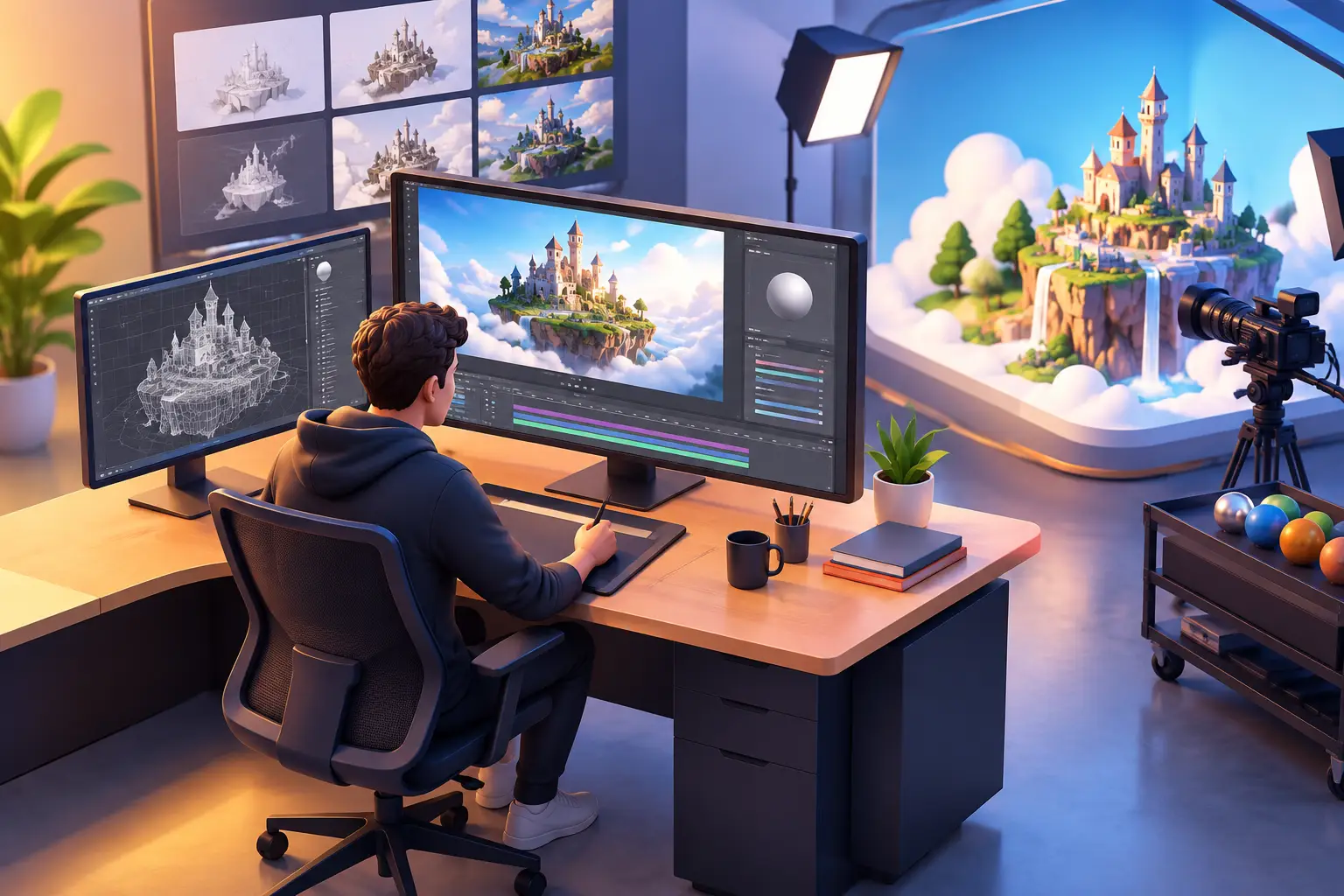
A pack shot can be technically perfect and still feel forgettable. The difference is rarely software alone. The best CGI studios combine artistic judgement, specialist craft and disciplined production management to create imagery that gives a product, character or campaign a distinct commercial presence.
For brand teams, agencies and production companies, CGI is no longer simply a substitute for a photoshoot. It is a creative production method with its own advantages: absolute control over light, materials, composition and movement; the ability to show what cannot yet be photographed; and a route to building visual systems that can evolve across markets, formats and campaign phases. But those advantages only materialise when the studio is selected for more than its showreel.
What distinguishes leading CGI studios
High-end CGI production sits at the meeting point of art direction and technical precision. A strong image must satisfy both. It needs to hold attention at a glance, while standing up to close scrutiny on a large-format display, a premium packaging application or a detailed product page.
The distinction begins with taste. Photorealism is valuable when it supports the idea, but it is not the only measure of quality. A food image may require an exaggerated sense of freshness. A sports visual may need energy that a camera could not capture at the decisive moment. A pharmaceutical animation may demand clarity and scientific restraint, without becoming cold or generic. Each calls for different visual instincts, not merely a different render setting.
The most accomplished partners understand this before production starts. They translate a creative ambition into decisions about perspective, surfaces, colour, set design, simulation, animation timing and finishing. Their work feels intentional because every choice supports a clear visual hierarchy.
Craft is visible in the details
Audiences may not articulate why an image feels convincing, but they recognise when it does not. A material can appear too uniform. Condensation can sit implausibly on a chilled bottle. Fabric can lack weight. A character’s expression can lose credibility in the smallest movement around the eyes.
These details are where distinguished artists earn their place. They understand how light behaves across glass, skin, metal, liquid, textiles and coated packaging. They know when physical accuracy should be preserved and when it should be artfully adjusted for a more compelling result. Commercial CGI is not a technical demonstration. It is crafted persuasion.
Specialism matters more than a broad claim
A studio may produce excellent automotive work yet not be the right choice for character animation, food styling or medical visualisation. Each category carries specific production challenges and aesthetic conventions. The ideal team has relevant experience, but does not rely on formula.
For example, packaging CGI often requires immaculate label reproduction, controlled reflections and assets that can accommodate late-stage artwork changes. Technology work may call for intricate product modelling alongside abstract worlds that make an invisible benefit feel tangible. In apparel, believable drape and movement are as important as the product’s silhouette.
This is why access to a curated network of specialists can be more valuable than a one-style solution. Best of Breed brings distinguished CGI artists and studios together under an agency-led production structure, matching the right creative capability to the specific demands of a brief.
Choosing a CGI studio for the brief, not the reel
A showreel is an essential starting point, but it is designed to display peak moments. Commissioning decisions require a closer reading. Ask whether the work demonstrates consistent mastery across full projects, and whether the studio can explain the thinking behind the finish.
The first practical question is simple: what must the asset achieve? A campaign hero visual, a product launch film, a social cut-down and an e-commerce asset may all use the same core model, but they should not be treated as identical deliverables. The viewing distance, aspect ratio, platform constraints and desired emotional response will shape the production approach.
It also helps to establish what is fixed and what remains open. Brand guidelines, product dimensions, approved packaging artwork and mandatory claims are fixed inputs. Mood, styling, environment, camera language and animation rhythm may be areas for exploration. A production partner should distinguish between these early, preventing avoidable revisions later.
Look for a clear route from brief to final asset
Premium CGI does not mean a mysterious process. The strongest studios make creative development visible through well-defined stages: briefing, reference gathering, visual development, modelling, lighting, animation where required, review and final delivery.
At each stage, clients should know what is being approved and what decisions remain flexible. Early visual frames or style explorations are particularly valuable. They establish the world before significant effort is committed to detailed build work. It is far more efficient to refine a lighting direction at this point than after a complex animation has been completed.
Transparent communication protects creative quality. It allows a studio to flag risks, test alternatives and advise where a proposed change could affect timing, cost or realism. This is not friction. It is responsible production management.
Judge production capability alongside aesthetics
The most beautiful still can be of limited use if the underlying asset cannot support the wider campaign. Where appropriate, ask how models, textures and environments are being constructed, and whether they can be adapted for new crops, markets or motion outputs.
Reusability is not always the priority. A singular hero image may justify a bespoke build designed solely for one composition. Yet for product ranges, seasonal activity or multi-channel launches, an intelligently built asset library can provide meaningful long-term value. The decision depends on the anticipated lifespan of the creative platform and the likelihood of future variants.
Where CGI delivers a genuine commercial advantage
CGI earns its place when it gives a brand greater control or expressive range than conventional production can reasonably offer. That may mean presenting an unreleased product before physical samples exist, placing a product in impossible environments, or creating a flawless repeatable look across a broad catalogue.
For food and drink, CGI can preserve the ideal state of a product indefinitely. A splash can be shaped with precision, a garnish can remain immaculate and a liquid can behave according to the needs of the composition rather than the limits of a live shoot. The trade-off is that the image needs experienced artistic direction to retain appetite appeal and avoid an overly synthetic finish.
In pharmaceuticals and healthcare, CGI can make complex mechanisms understandable without relying on literal footage. The challenge is different: visual impact must never undermine accuracy, clarity or compliance. The studio needs confidence in both storytelling and detail.
Character work offers another advantage. Whether the brief is stylised, expressive or near-photoreal, CGI enables control across every gesture, angle and environment. Consistency becomes especially valuable when a character must perform across film, social content, retail, experiential work and still imagery.
For sport, apparel and technology brands, the opportunity often lies in making performance visible. Motion trails, exploded views, material transformations and compressed time can turn product benefits into memorable visual language. When handled with restraint, these techniques give a campaign energy without overwhelming the product itself.
The role of collaboration in exceptional CGI
The best outcomes emerge when the client, creative agency and CGI production team treat the brief as a shared creative document rather than a handover. The client brings product knowledge and brand priorities. The agency brings the campaign idea and strategic context. The CGI team brings specialist knowledge of what can be made, what will read clearly, and how to make it beautifully.
This collaboration works best when feedback is consolidated and decisive. Multiple stakeholders will naturally have perspectives, particularly on high-visibility work. A clear approval structure prevents conflicting notes from diluting the original idea. It also gives artists the room to resolve a problem at the right level, rather than applying isolated fixes that compromise the whole image.
Budget should be discussed with the same candour. Complexity is not only measured by duration or final file count. It can come from exacting modelling, fluid simulation, character performance, elaborate environments, multiple product variants or demanding finishing. A considered scope gives the studio the conditions to put investment where audiences will see and feel it.
Build for impact, then build for use
The right CGI partner does more than create attractive images. It gives creative teams confidence that an ambitious idea can move from reference to finished asset without losing its precision, character or commercial purpose.
When commissioning CGI, start with the visual response the work must create. Then choose the artists, specialists and production process capable of protecting that response through every decision. That is how a campaign gains imagery with the authority to be remembered, not merely viewed.