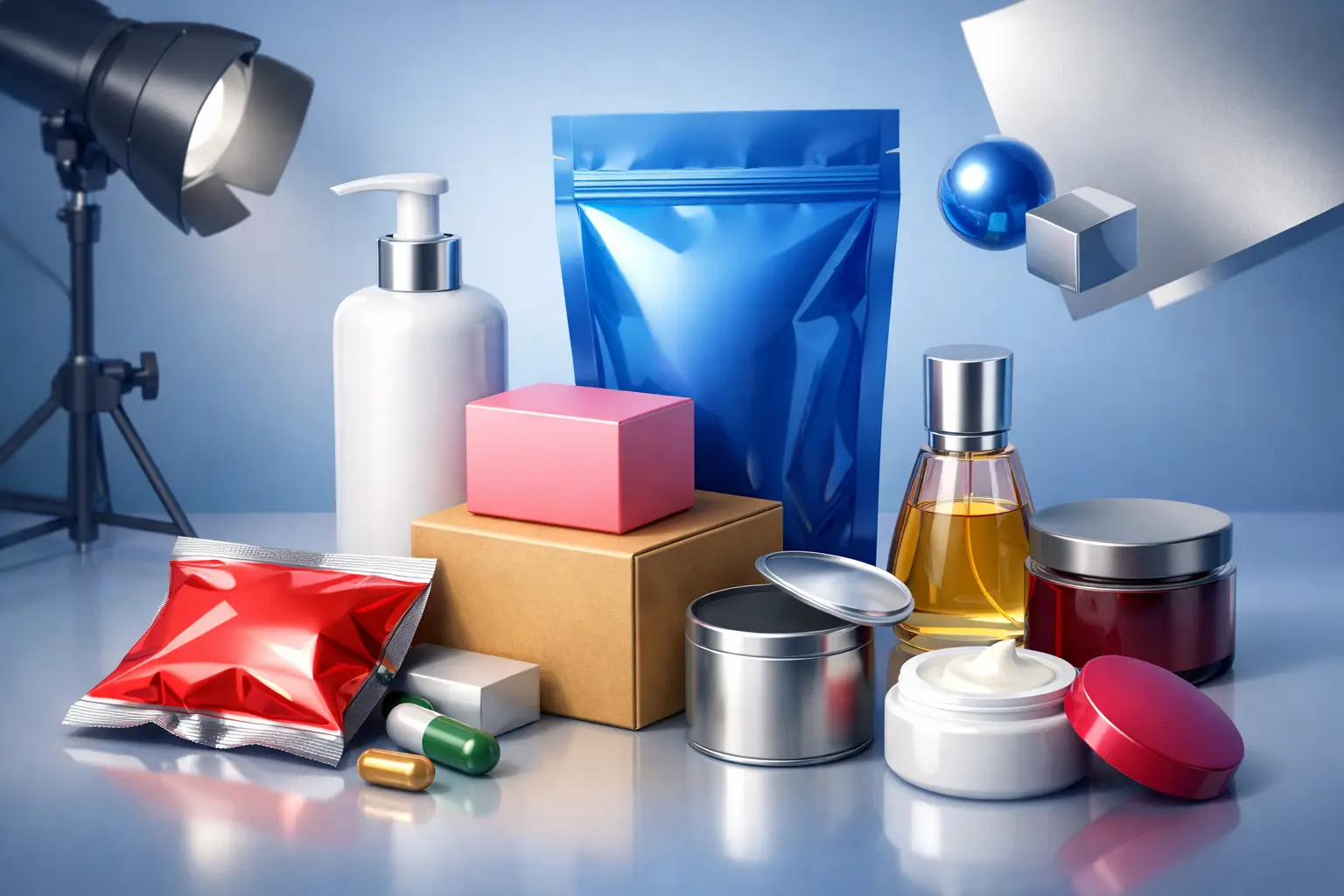
A new product rarely arrives at a straightforward moment. Packaging may still be in refinement, ingredients may be awaiting final approval, and the campaign launch date may already be fixed. That is precisely why use CGI for packaging is a serious commercial question, not simply an aesthetic one. High-end CGI gives brand and agency teams the ability to create impeccably finished pack imagery before conventional photography is practical, then carry that visual standard across every campaign channel.
For brands competing at shelf, on screen and in social feeds, packaging is often the first physical expression of product quality. It needs to look considered, tactile and unmistakably on-brand. CGI offers the control to make that happen without compromising on timing, consistency or creative ambition.
Why use CGI for packaging when photography is not enough?
Traditional pack photography remains valuable, particularly when a finished product must be shown exactly as it exists in the real world. But photography depends on a chain of variables: final production samples, studio availability, retouching, prop sourcing, product styling and the limits of a single shoot day. A late change to a flavour name, label finish or cap colour can mean an expensive reshoot or extensive post-production.
CGI changes the production model. Once the packaging has been accurately built in three dimensions, the asset can be refined, re-lit and re-composed with far greater efficiency. A product can appear in a pristine studio environment, suspended in a graphic world, covered in condensation or placed within a detailed lifestyle scene, all from the same approved digital model.
The benefit is not simply speed. It is a higher level of authorship. Creative teams can direct every reflection, fold, material, shadow and camera angle rather than accepting the compromises that physical conditions can impose.
Precision that makes the pack feel real
Premium pack CGI succeeds or fails on close observation. Consumers may not consciously identify a slightly incorrect varnish, an implausible highlight on a metallic can, or a label that sits too flat around a curved bottle. They will, however, sense when an image lacks credibility.
Distinguished CGI artists approach packaging as an object with weight, construction and material behaviour. They study how a matte carton absorbs light, how embossed lettering catches it, how transparent plastic refracts the contents behind it, and how foil shifts in different conditions. This is where technical mastery and traditional visual judgement meet.
The resulting image can be more than a clean product cut-out. It can communicate the intended character of the product: clinical precision for a pharmaceutical brand, appetite appeal for food and beverage, engineered performance for technology, or quiet luxury for a beauty range. CGI makes it possible to create that mood with exceptional consistency.
Material accuracy is a brand issue
Packaging finishes are not decorative details. They signal price point, category cues and product promise. A soft-touch surface, pearlescent coating or recycled paper stock should be represented with the same care as the logo itself.
This is especially relevant when a pack design is still progressing through print proofs. CGI can visualise intended materials and finishes early, helping stakeholders assess whether the design communicates the right level of quality before production is committed. It is not a substitute for physical proofing, but it is an invaluable decision-making tool.
Create campaign assets before the product exists
The commercial value of CGI is most obvious when timelines are compressed. Product development and campaign development frequently run in parallel, yet photography requires a finished sample that may not be available until late in the process. CGI allows creative production to begin from approved artwork, technical drawings, CAD data or carefully supplied reference imagery.
That means the hero image, launch animation, retailer assets and social crops can be developed while the physical product is being finalised. Brand teams gain more time for review and refinement, rather than waiting for samples and rushing approvals at the end.
It also protects launch plans when supply chains are unpredictable. If a sample is delayed, damaged in transit or differs from the approved artwork, the campaign does not necessarily need to pause. The digital pack remains a controlled, approved representation of the intended product.
CGI is particularly effective for range extensions. Once a core pack structure has been developed, new variants can be created with updated labels, colours and product details. Every variant can retain the same camera language, lighting quality and premium finish, which is difficult to maintain across separate shoots over time.
One asset system, many expressions
A strong packaging image must work harder than it once did. The same product may need to appear on an e-commerce listing, a billboard, a retailer media placement, a press advert, a paid social post and a presentation deck. Each channel has its own aspect ratio, crop, resolution and visual context.
With CGI, the product is a flexible asset rather than a fixed photograph. The camera can move. The lighting can change. The background can be replaced. A single pack can be rendered from multiple angles without asking a photographer to recreate a previous set-up months later.
This flexibility is especially useful when markets require different language versions or localised product claims. Provided the underlying structure remains consistent, approved label artwork can be updated and rendered for each market with a coherent global visual identity. Careful production management remains essential, of course. CGI makes versioning possible, but it does not remove the need for disciplined approval of regulatory copy, barcodes, ingredients and claims.
CGI animation extends the value further
A still render can establish product desirability. Animation can explain form, function and benefit in seconds. A pack can rotate to reveal a closure, separate into layers to show its construction, or transition through a range of variants with elegant precision.
For products where physical effects are difficult to capture, animation can be particularly persuasive. Think of powder flowing into a container, a liquid moving through clear packaging, or a technical product demonstrated in a clean, controlled visual environment. These moments should feel purposeful rather than ornamental. The animation needs to serve the product story, not distract from it.
More creative freedom, with fewer production constraints
Some packaging concepts are expensive or impractical to photograph. Floating ingredients, gravity-defying layouts, impossible camera moves and perfectly repeatable splashes often require substantial practical effects and extensive retouching. CGI enables these ideas to be designed as a complete visual world from the outset.
That freedom can support sharper creative differentiation. Instead of placing every product against a familiar studio backdrop, a brand can build a distinctive image language around it: precise graphic compositions, sculptural displays, richly detailed environments or stylised worlds that still preserve product accuracy.
The strongest work does not use CGI merely because it can create spectacle. It uses CGI because the medium offers a more exact route to the desired art direction. The pack remains central, legible and desirable, while the surrounding world adds meaning and memorability.
The trade-offs: when CGI is the right choice
CGI is not automatically the answer for every packaging brief. A straightforward product update with final stock available, a modest usage requirement and a natural editorial look may be better served by a well-planned photographic shoot. Likewise, products dependent on unpredictable human interaction can benefit from live-action capture.
CGI also demands good inputs. Accurate dimensions, current artwork, material references and a clear approval process are essential. If a client provides outdated dielines or changes critical pack details late, the work must be updated accordingly. The efficiency comes from building a reliable digital foundation, not from treating the process as effortless.
For high-visibility launches, the most effective route is often a considered combination of methods. Photography can bring human presence and genuine product moments; CGI can provide immaculate hero packs, scalable variants and technically demanding visual sequences. The decision should follow the creative objective, asset requirements and production timetable.
A production partner matters as much as the technology
The quality of packaging CGI depends on more than software. It relies on artists who understand product form, art direction, lighting and the exacting standards of commercial imagery. It also requires a production partner capable of translating a brief into a structured process, coordinating specialist talent and protecting quality through each stage of review.
Best of Breed brings together distinguished CGI artists with the range to address different product categories and visual styles, while providing the client-facing clarity required for complex commercial delivery. That combination matters when packaging must remain accurate across a large campaign ecosystem and still feel exceptional in its hero moment.
The most useful question is not whether CGI can make packaging look impressive. It can. The better question is whether your launch needs imagery that can evolve with the product, travel across channels and hold its quality under the closest scrutiny. When the answer is yes, CGI gives the pack the time, precision and creative consideration it deserves.